Leaders in Neuroscience: Yukiko Goda
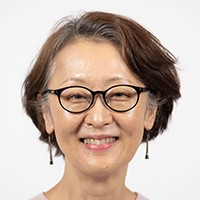
Yukiko Goda
“Leaders in Neuroscience” is a new interview series featuring current leaders in the field and their path to prominence. It complements both SfN’s “History of Neuroscience” autobiographies, as well as the forward-looking “Future of Neuroscience” series.
Yukiko Goda is a professor at Okinawa Institute of Science and Technology Graduate University. She received her BSc from the University of Toronto and PhD from Stanford University. After a postdoc at the Salk Institute, she joined the faculty of Biology Division, University of California San Diego in 1997. She then moved to the U.K. in 2002 as a Senior Group Leader in the MRC Laboratory for Molecular Cell Biology at UCL. From 2011 to 2022, she was a team leader at RIKEN BSI/CBS prior to taking up her current position. Goda’s research focuses on synapses and astrocytes. Her laboratory investigates the cellular principles by which synaptic strengths are set and dynamically modified in defined neural circuits that are consequential to supporting particular behaviors. Besides her own research, she has been actively involved in service to national and international neuroscience organizations, including as former chair of the International Collaboration Affairs Committee and vice president of the Japan Neuroscience Society, and currently as chair of the IBRO Asia-Pacific Regional Committee and councilor of SfN.
Neuroscience Quarterly (NQ): How did you find your way to neuroscience?
Yukiko Goda (YG): Growing up, I moved a lot. As soon as I started high school, my family moved from Japan to Toronto, Canada. We had lived in English-speaking countries before, but there was still a language barrier for me in Toronto. This meant that my language arts homework took me a lot of time to complete. On the other hand, my math and science education in Japan had me two years ahead of what I was being taught in Toronto. So, I found myself gravitating toward science fields.
I enrolled in the University of Toronto for college and had some great chemistry professors who made the field exciting. I did my first summer research internship in a chemistry lab, but I felt the work was a little dry. The next summer I interned in a biology lab to study transcription regulation in a bacteriophage. I really enjoyed this research and felt that graduate school would be a good next step. My PhD at Stanford University focused on cell biology.
“It really wasn’t until my postdoc that I found myself studying neuroscience.”
It really wasn’t until my postdoc that I found myself studying neuroscience. I took a Cold Spring Harbor course on developmental neurobiology and, during a coffee break conversation with one of the lecturers, learned about synaptic plasticity and papers from Chuck Stevens’ lab in the field. I found that work very interesting, and I was fortunate that he hired me as a postdoc.
NQ: Can you briefly describe the research you’ve pursued over your career?
YG: My research focuses on synapses. We have sought to identify the basic rules of when and how synapses are generated, modified, and eliminated. For example, we examined the role of the cytoskeleton and adhesion proteins in synaptic transmission and synaptic remodeling, how individual synapses modify their strengths in relationship to their neighbors to maintain optimal activity, and the contribution of resource sharing along axons and dendrites. More recently, we are examining how astrocytes regulate individual synaptic strengths in local networks.
NQ: You have been a principal investigator (PI) in three countries: in the U.S. at the University of California San Diego; in the U.K. at University College London; and in Japan at the RIKEN Brain Science Institute and now the Okinawa Institute of Science and Technology Graduate University. What were some of the cultural differences you experienced in moving between countries?
YG: Some cultural differences are in how research is supported. For example, Japan tends to spread government grants more evenly through top-down projects than the U.S. Another difference is when and where casual conversations about research take place. The U.K. has teatimes during the day and after-work gatherings at the local pub. In the U.S., it’s common to have a conversation over a cup of coffee. Japanese researchers like to gather for a drink after work or at small meetings and conferences of which there are many.
There were two cultural differences I had to adapt to in Japan. The first was around seniority. In some committees, for example, there is an unwritten rule that people speak in order of seniority. This is very different from the U.S., where people are more free to speak up when they want. The U.K. was somewhere between these two ends. I had friends joke that it was good for me not to have moved directly from the U.S. to Japan! The second cultural difference was related to representation of women in science. In the U.S. and U.K., women hold 40–50% of faculty positions in science. In Japan, that number is closer to 10–12%; my current institution, the Okinawa Institute of Science and Technology, is a little unusual at 18% women faculty. That is changing, though, as I see the current classes of graduate students and postdocs having many more women scientists.
NQ: How did you find your way to SfN?
“My first SfN annual meeting was in 1992 during my first year as a postdoc. I didn’t present any work, but I absorbed a huge amount of neuroscience. That meeting gave me a lot of ideas that resulted in some of my first papers as a postdoc.”
YG: My first SfN annual meeting was in 1992 during my first year as a postdoc. I didn’t present any work, but I absorbed a huge amount of neuroscience. That meeting gave me a lot of ideas that resulted in some of my first papers as a postdoc. I can’t say I’ve been to every SfN annual meeting since then, but every time I attend I come away with new connections and inspiration.
NQ: You’ve served on multiple SfN committees, including the Program Committee, and now serve as an SfN Councilor. These volunteer roles require a lot of time in order to serve the neuroscience community. What is your rationale for dedicating so much of your time to the Society?
YG: First, I wanted to give back. I’ve gained so much from attending the SfN annual meeting, the least I could do was serve on the Program Committee. I learned how the vast program was built, and when I became theme chair, I traveled to the SfN office in Washington, D.C., to physically build the program using big paper boards that represented each session. As for my service as a Councilor, I feel that international collaborations are really important, especially in today’s geopolitical climate. Japan is traditionally one of the non-U.S. countries with the highest representation at the annual meeting, and I hope to represent both the Japanese and larger international perspective in SfN Council.
NQ: Finally, what guidance would you give to researchers about to attend their first SfN annual meeting?
YG: I would say don’t be shy! Present your work, ask questions, and introduce yourself to others. I know this can be difficult for people who speak English as a second language; the Saturday night poster session is a great time for this. One thing I try to do is introduce my lab members to others during the annual meeting and, in fact, at any other conferences. Finally, take advantage of as many of the opportunities offered by SfN as possible.