Future of Neuroscience: Dennis Arruda
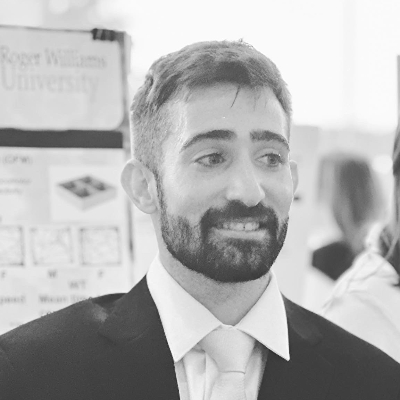
Dennis Arruda
“Future of Neuroscience,” a forward-looking complement to SfN’s “History of Neuroscience” autobiographies, is a series of interviews where early career researchers reflect on their career journeys and share thoughts on where neuroscience is headed.
Dennis Arruda is a first-year neuroscience PhD student at The University of Texas Medical Branch (UTMB), where his work is centered on traumatic brain injury and neurodegenerative disease. As an undergraduate, Arruda received national recognition as a Fulbright semifinalist, SfN Trainee Professional Development Awardee (TPDA), and through multiple NIH-funded research training experiences. He is currently completing his first semester rotation within the Moody Brain Health Institute (MBHI) under the mentorship of Maria-Adelaide Micci.
Outside of the lab, he enjoys spending time with his two cats (and his inclination to feed strays might land him a third). His path to academia reflects resilience and a commitment to advancing research that drives meaningful progress in neuroscience.
Neuroscience Quarterly (NQ): Why did you decide to pursue neuroscience as a career?
Dennis Arruda (DA): I initially planned to go to school to be a substance use counselor. I grew up in a low-income household and watched many family members’ lives be destroyed by the disease of addiction. I was addicted to opiates for four years, and my counselor during treatment inspired me to go back to school.
But then, while I was working towards a bachelor’s degree in psychology at Roger Williams University, my little brother passed away from lack of oxygen to the brain from drowning. I couldn’t understand why there was nothing they could do for him. That’s when I discovered what I really wanted to do — develop treatments for people with traumatic brain injury. And that’s what led me to neuroscience.
NQ: As an undergraduate, you helped develop Roger Williams University’s undergraduate neuroscience major. How did you go about such a project?
DA: I worked full-time at Roger Williams for two years to be eligible for their tuition remission program. Shortly after securing free tuition and starting college, I decided to make the transition from psychology to neuroscience, but Roger Williams didn’t offer that degree. Transferring to another school was not an option for me because I was in no position to set aside free tuition.
I talked to a faculty member at the school who did neuroscience research, Victoria Heimer-McGinn, about how to pursue a career in neuroscience. She agreed to mentor me and quickly proved to be my most valuable resource, both in developing a neuroscience major and becoming a neuroscientist.
I researched the requirements of other schools’ neuroscience bachelor’s degrees, looked at what graduate schools required, and presented a program plan to the dean and the provost.
Thankfully, Roger Williams already had the resources for a neuroscience degree and offered students an individualized major, which is a pathway to creating a degree. I researched the requirements of other schools’ neuroscience bachelor’s degrees, looked at what graduate schools required, and presented a program plan to the dean and the provost.
I was amazed at how much support and interest there was. One of my lab mates also declared neuroscience as a major once it was available, and we graduated together. There was clearly a desire for this degree already. I just took the steps to make it happen.
NQ: What did you learn from this experience?
DA: My whole neuroscience journey, including my work to create a neuroscience major at Roger Williams, has been about being laser focused on what I wanted and just going for it. I barely graduated from high school, was homeless for a year, and at one point was incarcerated for six months. When I was getting out of jail, a lieutenant said to me, “You’ll be back within 60 days.” I developed a strong reason for pursuing a research career, and there was nothing that was going to stop me.
Sometimes it takes those lows to discover what really motivates you. These days, when graduate school gets overwhelming, I remember I’m doing this for my little brother, and it helps.
NQ: What advice do you have for other early career researchers?
DA: This journey can be difficult, but if you have a strong reason to pursue science, you’ll always find the motivation to keep going. Reflecting on my own experience, there was never a reality that I wasn’t going to find a way to get into a PhD program. A lack of financial resources, addiction, and homelessness delayed my timeline, but they also fueled my motivation to get to where I am.
As the first person in my family to graduate from college, having a mentor was critical.
As the first person in my family to graduate from college, having a mentor was critical. My advice would be to connect with as many people as possible — there’s a whole world of opportunity for connections, collaborations, and even funding. SfN is really good at offering funding opportunities for early career researchers. Taking advantage of those programs as well as seminars and workshops can lead to pivotal career moments.
I also find outreach to be both rewarding and beneficial to my research. Talking about your work makes you think about it from different viewpoints. It forces you to learn something inside and out, and in that way, it makes you a better researcher.
NQ: What are you working on currently, and what are your long-term career goals?
DA: As a first-year graduate student, I’m still rotating through different labs and soaking it all in. I’m currently working with extracellular vesicles from neural progenitor cells. I’m interested in one day investigating their use as a possible treatment for traumatic brain injury.
My previous lab rotation used organoids to model Alzheimer’s disease, which is another technique that’s fascinating to me. During Brain Awareness Week, we had high school students come to campus to learn about organoids, and they were blown away.
In the long term, I plan to stay in academia, and I want to be at the forefront of regenerative neuroscience. While the brain has remarkable compensatory mechanisms for dealing with injury, it remains severely limited in its ability to repair damage compared to other organs. Most therapeutic approaches focus on helping the brain adapt to the damage by recruiting alternative pathways. This is a great approach, but personally, I am driven by the idea that we can move beyond compensation and help the brain truly restore itself, which is why I’m interested in organoid and induced pluripotent stem cell technologies.
As I progress in my career, I want to be a resource for the next generation of scientists by mentoring early career researchers and doing outreach. I think there are a lot of people who want to be neuroscientists but just don’t know it yet. I know because for a long time I was one of those people.