Featured Panel Sessions
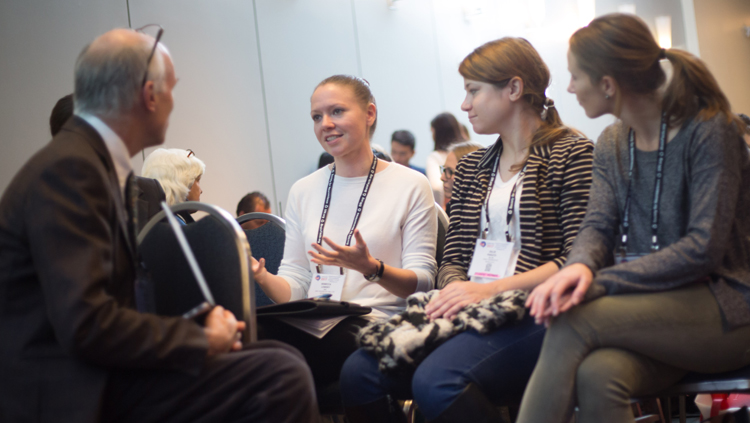
Featured Panel Sessions taking place during Neuroscience 2026 are listed below. All sessions will take place in the Walter E. Washington Convention Center (WCC). All times are in Eastern Standard Time (EST).
View other scientific sessions being held this year.
Basic-Translational-Clinical Roundtables
Overlap of GLP-1 Circuitry in Addiction and Obesity: Treatment Implications
Chair: Nora D. Volkow, MD
NIH, National Institute on Drug Abuse
Speakers: Anders Fink-Jensen, MD, DMSci; Matthew R. Hayes, PhD; Paul J. Kenny, PhD
Date & Time: Monday, November 16, 10:30 a.m.–noon
Location: WCC Room 152
Theme: Theme G – Integrative Physiology and Behavior
Session Number: BTCR01
GLP-1 receptor agonists have transformed obesity treatment and may also reshape addiction treatment. Although developed for diabetes, these medications act on brain circuits to suppress craving for food but presumably for addictive substances as well. This session will examine GLP-1 signaling, shared neural pathways in obesity and addiction, preclinical and clinical evidence, and implications for future therapies.
From Bed to Bench and Back Again: Integrating Patient Insight Into Translational Neuroscience
Chair: Kirk Leech
European Animal Research Association
Speakers: Michele A. Basso, PhD; Joel S. Perlmutter, MD; Ines Serrenho, PhD
Date & Time: Tuesday, November 17, 10:30 a.m.–noon
Location: WCC Room 152
Theme: Theme C – Neural Aging and Degeneration
Session Number: BTCR02
This roundtable explores how patient perspectives can actively shape translational neuroscience. Drawing on EARA’s Patient Discovery Project and in partnership with patient advocacy groups, the session highlights how structured patient–clinician-researcher dialogue can demonstrate real-world impact of neuroscience research, while supporting sustainable, patient-centered innovation.
Neural Circuits of Decreased Sound Tolerance: From Sensory Processing to Clinical Translation in Misophonia and Related Disorders
Chair: Lauren Harte Hargrove, PhD
Misophonia Research Fund
Speakers: Chloe J. Bair Marshall, PhD; Fatima T. Husain, PhD; Tiffany G. Woynaroski, PhD
Date & Time: Wednesday, November 18, 10:30 a.m.–noon
Location: WCC Room 152
Theme: Theme E – Sensory Systems
Session Number: BTCR03
Misophonia is a disorder marked by distress and intolerance to specific sounds. Little to no effective treatments exist for this and other forms of decreased sound tolerance with abnormal emotional, physiological, and behavioral responses to everyday sounds. This session will integrate basic auditory and limbic circuit neuroscience, translational biomarkers, and clinical perspectives to examine how sound becomes aversive, as well as insights to inform diagnosis, measurement, and intervention.
Dual Perspectives
Converging on Understanding? Scale, Embodiment, and the Future of NeuroAI
Moderator: Joseph Monaco, PhD
NIH, National Institute of Neurological Disorders and Stroke
Panelists: Bing W. Brunton, PhD; Patrick J. Mineault, PhD
Date & Time: Sunday, November 15, 10:30 a.m.–noon
Location: WCC Room 152
Theme: Theme I –Cognition
Session Number: DUP01
Large neural networks can now predict brain activity with high accuracy, but do high brain scores constitute understanding? Brunton argues brains evolved to control bodies, and studying neural computation without embodiment limits what we can learn. Mineault counters that foundation models are building a data ecosystem where prediction enables mechanistic insight. This session will examine whether embodied modeling or scaled AI ecosystems will drive the next decade of NeuroAI.
Storytelling Sessions
The Artist in the Neuroscience Lab
Chair: Michele Banks
Artologica
Panelists: Michele Banks; Geinene Carson; Kimberly Fiock, PhD; Christine Liu, PhD
Date & Time: Sunday, November 15, 1:30–3 p.m.
Location: WCC Room 152
Theme: Theme K – History, Education, and Society
Session Number: STR01
This session will explore the value of collaborations between artists and neuroscientists. The speakers will discuss ways that neuroscientists can work with artists to enrich awareness and understanding of their research. The stories will draw upon the extensive experiences of the speakers (two artists and two neuroscientists) in art-science collaborations, including lab-based art residencies, neuroart exhibitions, and the creation of neuroscience-inspired artworks.
The Patient-Researcher: The Importance of Lived Experience for Neuroscience Research
Chair: Paula L. Croxson, DPhil
Stellate Communications
Panelists: Denise J. Cai, PhD; Uma R. Chatterjee; Jon Nelson; Deena M. Walker, PhD
Date & Time: Monday, November 16, 1:30–3 p.m.
Location: WCC Room 152
Theme: Theme K – History, Education, and Society
Session Number: STR02
Patient-researchers: individuals with lived experience of the disease, health condition or disability they study, are an essential part of research. Their unique motivation and perspectives drive innovation and insights. However, a combination of stigma and lack of support mean that they experience challenges, are marginalized, or are excluded from research entirely. In this session, presenters will share their personal stories to highlight how their lived experience intersects with their work.
JNeurosci Early Career Distinguished Review Symposium
Moderator: Sabine Kastner, MD
Princeton University
Date & Time: Tuesday, November 17, 1:30–3 p.m.
Location: WCC Room 152
Session Number: JEC01
The Development of Receptive Fields in Human Visual and Auditory Cortex Constrain Childhood Perception
Speaker: Jesse Gomez, PhD
Princeton Neuroscience Institute
Human brain development is the most protracted of any species, yet we know very little about postnatal changes in cortical function and their impact on emerging behaviors critical for seeing and hearing. This talk will discuss advances in modeling receptive fields in children using fMRI. We demonstrate that visual and auditory cortex reshape how they sample sensory space across development, and that these maturing neural computations scaffold changes in visual attention and audition.
Normative and Adversity-Induced Plasticity in the Maternal Brain
Speaker: Millie Rincón-Córtes, PhD
University of Texas at Dallas
The speaker will describe dynamic, adaptive changes in the maternal dopamine system during the early postpartum period. The lecture will present evidence that postpartum resource scarcity alters dopamine system function, as measured using in vivo electrophysiology and fiber photometry in rat dams, with effects that vary across behavioral contexts. Findings linking resource scarcity, dopamine dysfunction, and impaired maternal care will be discussed, with implications for postpartum depression.
Exploring the Role of Ependymal Cilia in Neurological Disease
Speaker: Jo Anne Stratton, PhD
Montreal Neurological Institute
The speaker will examine how dysfunction of motile cilia on brain ependymal cells may contribute to neurological features of primary ciliary dyskinesia. Drawing on patient findings and experimental models, the speaker will explore effects on cerebrospinal fluid flow, waste clearance, ventricular structure, inflammation, and behavior. Comparisons with multiple sclerosis will reveal shared mechanisms and highlight potential biomarkers and therapeutic targets.